Start with Santa Rosa materials, deposits, and the finish the customer will see
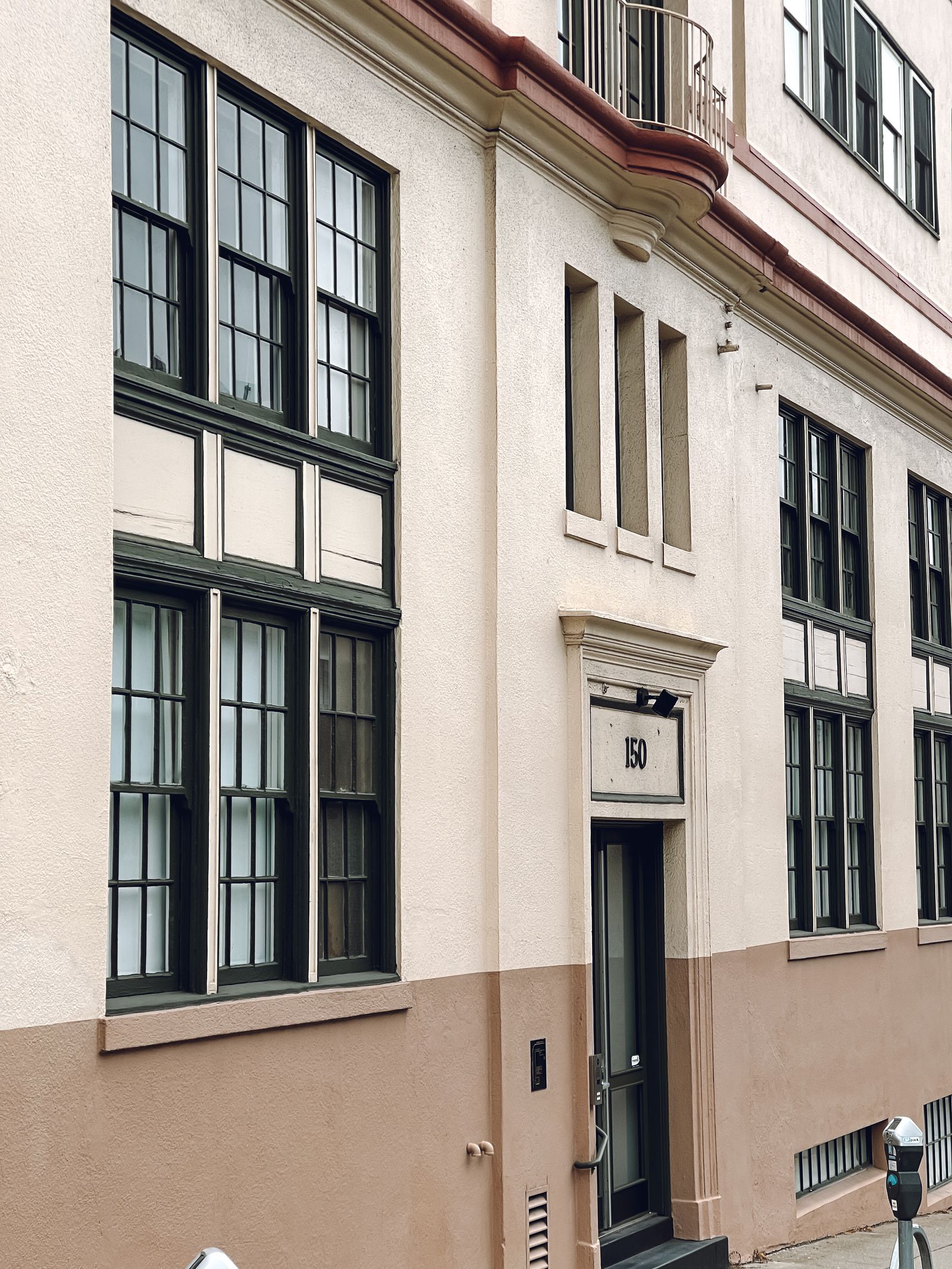
Santa Rosa commercial exteriors often combine stucco, painted masonry, brick, concrete block, tilt-up panels, EIFS, wood accents, metal siding, glazing, stone, tile, awnings, and illuminated signs. A historic-looking downtown storefront may have delicate trim and active sidewalks beside newer office construction. A winery or tasting room can combine stone, wood, metal, glass, patios, landscaping, and service areas. A medical or professional building near Montgomery Drive may include covered drop-offs, patient paths, air intakes, and a high standard for a calm arrival. A warehouse, distribution site, or flex building near Airport Boulevard may have broad durable panels, loading docks, truck traffic, and dust at the lower wall. Each zone needs its own pressure, chemistry, dwell, rinse, protection, and finish expectation.
Soft washing may fit compatible organic growth, pollen, bird residue, light smoke film, dust, and other surface soil after the material is reviewed. It is not a cure for oxidation, hard-water deposits, failed paint, efflorescence, corroded metal, cracked stucco, failed sealant, active leaks, or bonded construction residue. A dark run beneath a parapet may be caused by roof drainage, a clogged gutter, irrigation overspray, an exhaust outlet, or a coating failure rather than a dirty facade. A test area should be allowed to dry before an owner approves a full elevation. The scope should explain expected improvement and identify any repair, restoration, glass-detail, or coating work that is separate from routine washing.
- Map stucco, masonry, wood, metal, glass, coatings, stone, tile, and sealants by elevation.
- Separate wildfire smoke, road film, vineyard dust, organic growth, mineral deposits, and damage.
- Define whether the goal is routine maintenance, a guest-ready reset, a lease tour, or a detailed finish.
- Keep leak diagnosis, envelope repair, paint correction, restoration, and glass polishing outside routine washing.
Build the work around Santa Rosa neighborhoods and commercial corridors
Downtown Santa Rosa, the Santa Rosa Plaza area, Railroad Square, and nearby Fourth Street can place sidewalks, restaurants, tasting rooms, offices, events, deliveries, and pedestrian traffic directly beside the building. A hotel or hospitality property needs a plan for guest arrivals, valet or rideshare movement, outdoor seating, housekeeping, and event turnover. Montgomery Village, Coddingtown, and the Mendocino Avenue corridor bring retail, medical, professional, and education uses with busy parking lots and several occupied entrances. A quote should identify accessible paths, tenant doors, customer queues, signs, landscaping, patio seating, emergency lanes, and who can pause the work if conditions change.
The Highway 12 and Santa Rosa Avenue corridors connect offices, retail, auto-oriented businesses, hospitality, medical services, and wine-country traffic. Airport Boulevard and the northern industrial areas can add warehouses, logistics, aircraft-related activity, loading docks, forklifts, gates, and shift changes. Properties near Mark West Springs Road or the county's vineyard and agricultural edges may have dust, irrigation, gravel shoulders, tanks, trellises, farm equipment, and drainage features close to the work zone. A school, college, healthcare campus, or event venue may require work outside class changes, patient transport, performances, or scheduled tours.
Before scheduling, identify water access, hose crossings, parking restrictions, delivery windows, security rules, roof access, HVAC intakes, irrigation, drains, public sidewalks, and the operating representative. Phasing by entrance or elevation can keep a restaurant, tasting room, hotel, clinic, or retail center open while one controlled zone is cleaned. For a winery or agriculture-related property, the scope should identify production, tasting, harvest, storage, and public areas separately. Local detail is operational information: it determines how a clean facade can be delivered without creating a new disruption.
Plan for smoke, dry heat, pollen, wind, and winter rain
Santa Rosa's dry summer weather and heat can make sun-facing stucco, painted panels, metal, glass, and pavement much hotter than the forecast air temperature. A solution can dry unevenly on a west-facing wall, leaving the crew with less working time and an owner with a less uniform result. The plan may require smaller sections, shade-aware timing, more observation, and a dry inspection before the next elevation. Outdoor work should also account for heat exposure, water, rest, shade, and schedule changes appropriate to the actual field conditions.
Wildfire smoke and ash can settle on parapets, ledges, HVAC screens, signs, roof edges, and recessed details. Smoke residue is not identical to organic growth, and ash can become abrasive when moved across a surface. Air-quality conditions may affect outdoor crews, guests, patients, students, and employees even when the facade itself can technically be rinsed. Wind can move smoke film or dust back onto a cleaned area, carry mist beyond the boundary, and make upper-elevation aerial work unsuitable. The field plan should monitor conditions and pause when visibility, wind, heat, or air quality makes the work uncontrolled or unreasonable for occupants.
Winter rain changes traction, runoff, visibility, access, and drying. Moss or organic growth may be more noticeable on shaded north-facing walls, roof edges, masonry joints, and areas where gutters or irrigation keep the surface damp. A storm can send a concentrated flow from a roof edge toward a low point or public path. A recurring plan should record whether resoiling comes from trees, roof drainage, irrigation, agriculture, smoke, road traffic, or shade. Washing cannot repair a leaking downspout, failed flashing, or moisture source; the closeout should identify that condition for the property team.
Use drone assistance only where the Santa Rosa site supports it
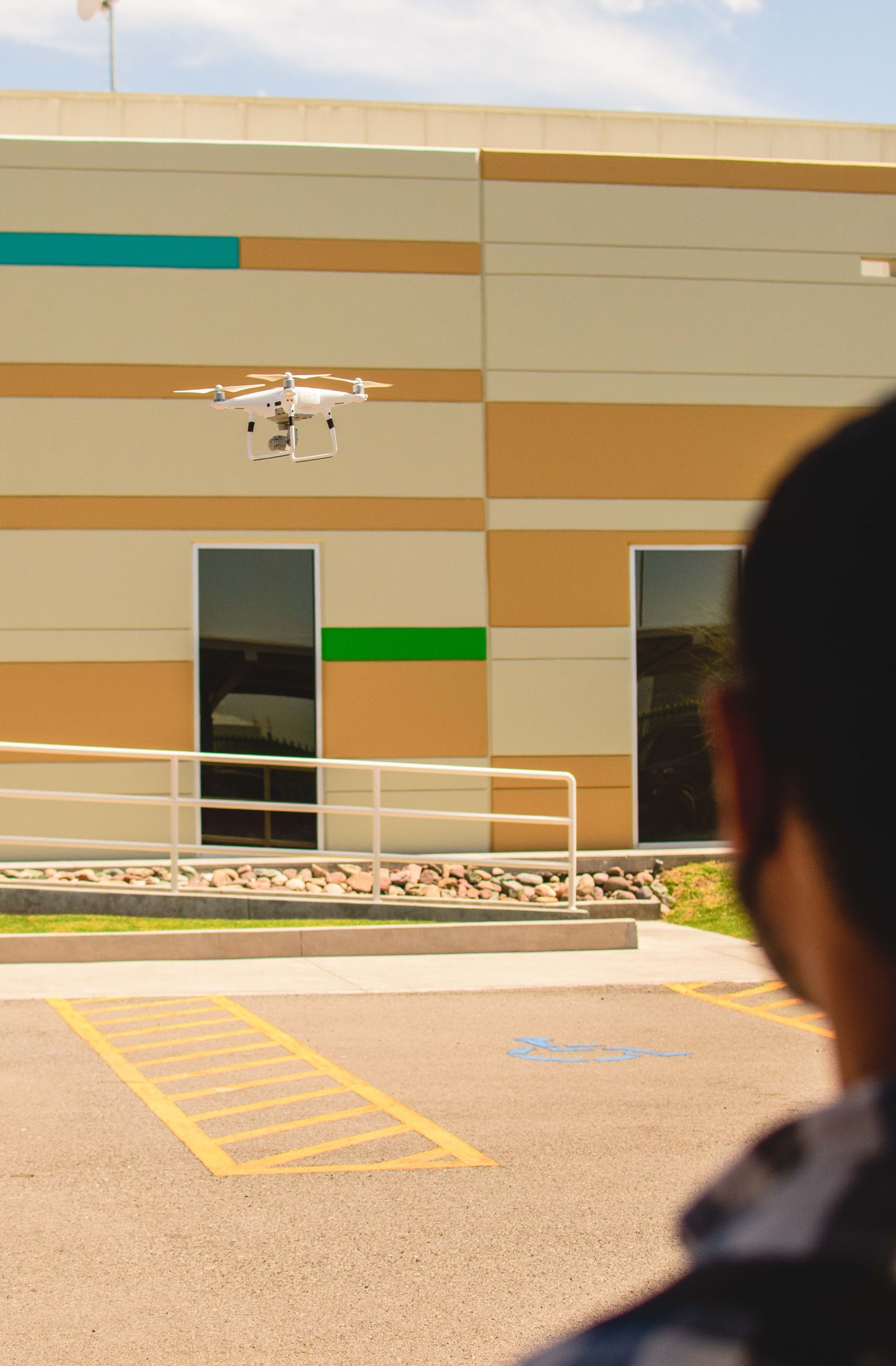
Drone-assisted application or rinsing may support a broad, compatible upper elevation when there is adequate stand-off distance, clear visual control, manageable wind, a secure launch and recovery area, water access, and a protected ground zone. That can reduce some lift repositioning for a hotel, office, school, warehouse, or broad tilt-up facade. It is not a universal replacement for contact access. Upper glass that needs a squeegee finish, recessed trim, fragile wood, bonded deposits, scraping, brushing, close inspection, or repair may still require a pole, lift, roof access, or hand work.
Santa Rosa Airport operations, nearby roads, utility lines, mature trees, vineyard structures, cranes, tanks, rooftop equipment, event activity, and adjacent occupied properties can affect an aerial plan. Commercial small-UAS operations must follow applicable Federal Aviation Administration requirements, including current rules for certification, registration, airspace, visual control, and operations near people or moving vehicles. Property permission does not settle aviation requirements. A responsible proposal states the elevations proposed for aerial support, the weather and site limits, ground-control boundary, public separation, and grounded backup method if conditions change.
The right aerial decision follows the required finish. A drone may wet or rinse a broad upper wall while a ground team protects doors, monitors visitors, controls water, and completes entrance or detail work by another method. If a wine-country property needs close glass cleaning, historic-material care, mineral removal, joint repair, or coating correction, those needs should be visible in the scope instead of being hidden behind the word drone. We will identify what aerial support can and cannot accomplish before a Santa Rosa owner approves the work.
Protect Santa Rosa drainage, landscaping, vineyards, and public routes
Before washing, trace roof drains, downspouts, curb inlets, trench drains, parking slopes, loading areas, planted beds, irrigation heads, vineyard rows, doors, air intakes, electrical equipment, vehicles, neighboring parcels, and public sidewalks. A downtown property may direct water toward a crowded curb while a winery or agricultural site may have gravel, soil, swales, tanks, or a private drainage feature. A visible grate is not automatic permission to discharge wash water, and a planted bed or vineyard row is not an approved disposal location without a site-specific decision. Water direction should be observed before product or rinse water is applied.
The proposal should state water source, application and rinse assumptions, product and soil considerations, expected flow, protection or recovery, and the stop condition if water travels differently than planned. Depending on the site, controls may include dry cleanup, reduced flow, temporary diversion, inlet protection, monitored recovery, filtration, or an approved disposal arrangement. Product labeling alone does not prove that runoff is acceptable at a particular property. Wine production, food service, healthcare, schools, landscaping, and public access deserve a documented protection plan before work begins.
Protect crops and vines, landscaping, open doors, HVAC intakes, production equipment, signs, vehicles, guest paths, patient routes, and accessible travel. A hotel may need a spotter at the main entrance; a warehouse may need a stop signal for a forklift; a tasting room may need work separated from tours and outdoor seating. Closeout should include dry-condition photographs, completed zones, controls removed, access returned to service, and remaining deposits, damage, or source conditions noted for follow-up.
- Trace water from each work zone to the actual low point before applying product or rinse water.
- Confirm water access, protection, recovery, and disposal assumptions in writing.
- Coordinate vineyards, landscaping, irrigation, air intakes, production areas, vehicles, guests, and public routes.
- Stop when wind, smoke, heat, rain, traffic, occupancy, equipment, or flow makes the plan uncontrolled.
Choose a one-time Santa Rosa reset or an evidence-based maintenance plan
A one-time project may be timed for a wine-country event, hotel opening, tasting-room season, healthcare inspection, school break, lease tour, ownership visit, renovation handoff, or guest-facing presentation reset. Prioritize the main entrance, canopy, sign band, patio-facing wall, parking-facing elevation, and areas most visible to visitors, customers, patients, students, or prospective tenants. A phased first visit can improve the public-facing parts of a building before an owner commits to lower-priority service elevations or a broader maintenance program.
Recurring care may make sense where pollen, smoke, dust, road traffic, vineyard activity, irrigation, shade, moss, bird activity, or hospitality standards create predictable resoiling. The interval should come from observed condition, previous results, weather, access, budget, and the business calendar. One visit might separate entrance and canopy work from upper facade washing, glass detail, loading areas, or production-adjacent surfaces. It should not promise monthly, quarterly, or annual service solely because a property is in Santa Rosa; the property record should support the frequency.
For a quote, call +1 239-351-2897, email contact@dronebuildingcleaners.com, or use the contact form. Include the Santa Rosa address, property type, photos, approximate height, priority elevations, visible conditions, water access, nearby drains, irrigation or vineyard concerns, occupancy restrictions, and timing needs. We can review hotels, tasting rooms, healthcare facilities, schools, offices, retail centers, warehouses, agricultural buildings, campuses, garages, and industrial exteriors and explain where aerial support, soft washing, controlled pressure, contact work, or specialty treatment fits. The final scope should tell you what will be cleaned, how the site will be protected, and what should be referred for separate repair or restoration.